
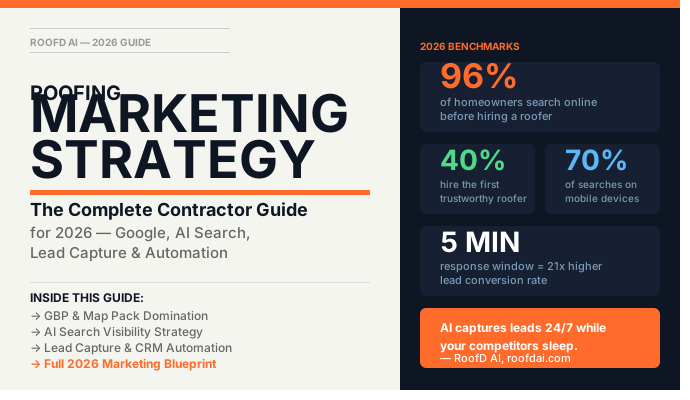
A roofing marketing strategy in 2026 is not optional. It is the difference between a full calendar and an empty one. Nearly 96% of homeowners search online before hiring a roofing contractor. About 40% hire the first contractor that looks trustworthy. Furthermore, over 70% of those searches happen on mobile devices. The contractors who win are not necessarily the best roofers in their market. They are the most visible, the most responsive, and the most systematized.
This guide covers every component of a complete roofing marketing strategy for 2026, from Google visibility and AI search to lead capture, follow-up automation, and review generation. Each section covers what to do, why it matters, and how to connect it to the rest of your system so every piece compounds the next.
Why Most Roofing Marketing Strategies Fail
Most roofing contractors approach marketing as a collection of disconnected tactics. They run some Google Ads, post on Facebook occasionally, and ask for reviews when they remember. Each tactic operates in isolation, and consequently, each one underperforms because of it.
The Disconnection Problem
A Google Ad that sends traffic to a website with no lead capture system wastes every click. A great website with no Google Business Profile gets skipped in local search. Furthermore, a strong review count with no follow-up automation loses leads to faster competitors. Marketing tactics only perform at full potential when they connect to each other as a system.
What a Complete System Actually Looks Like
A complete roofing marketing system has five layers. Visibility gets homeowners to find you. Credibility gets them to trust you. Engagement captures their interest before they leave. Follow-up converts interest into booked inspections. Additionally, retention turns closed jobs into reviews and referrals. Each layer feeds the next, and AI tools now automate the layers that used to require manual effort.
For a broader look at all the ways AI is changing how roofing companies book more jobs, read: 5 Ways Roofing Companies Are Using AI to Book More Jobs in 2026
Layer 1, Visibility: Getting Found Before Your Competitors
Visibility is the foundation of every roofing marketing strategy. No lead can be captured from a homeowner who never finds you. In 2026, visibility happens across three channels (Google local search, organic search, and AI search), and each one requires a different approach.
Google Business Profile and the Map Pack
Between 60% and 90% of roofing leads originate from Google’s local Map Pack. Google Business Profile signals account for 32% of all local ranking factors, making GBP optimization the single highest-ROI marketing activity available to any roofing contractor. Most competitors, however, have incomplete profiles, which makes full optimization a significant competitive advantage.
A fully optimized GBP means claiming and verifying the profile, setting the primary category to “Roofing Contractor,” configuring accurate service areas, completing every service listing, uploading photos weekly, publishing posts consistently, and responding to every review.
For a complete step-by-step GBP optimization guide, read: Roofing Google Business Profile: Rank Higher and Get More Calls
Organic SEO and Blog Content
Over half of roofing search traffic comes from long-tail searches, specific queries like “emergency roof leak repair in [city]” or “hail damage roof inspection [city].” Ranking for these searches requires dedicated service pages for each major service, location pages for each city you serve, and consistent blog content that answers the questions homeowners ask before hiring a contractor.
Publishing two to four blog posts per month targeting specific contractor-relevant keywords builds topical authority that compounds over 12 to 24 months. In contrast to paid ads that stop delivering the moment budgets pause, blog content generates traffic for years after publication. Furthermore, content that answers specific questions gets cited by AI search tools, which brings visibility into the next channel.
AI Search Visibility and Why It Matters Now
Homeowners increasingly ask ChatGPT, Google AI Overview, and Perplexity to recommend roofing contractors. These tools synthesize information from multiple sources and deliver a shortlist of three to five companies. Getting into that shortlist requires deep service page content, consistent citations across directories, FAQ schema markup, strong review volume, and transparent pricing information on your website.
For a complete guide to getting your roofing company recommended by AI search tools, read: Roofing Company AI Search: Get Found by ChatGPT in 2026
Layer 2, Credibility: Converting Attention Into Trust
Visibility brings homeowners to your website or GBP listing. Credibility, however, determines whether they call you or move on to the next result. Three factors drive credibility faster than anything else in 2026.
Google Reviews
Review signals account for 20% of local search ranking factors. Beyond rankings, reviews are the primary trust signal homeowners use when choosing between contractors. A roofing company with 200 recent 5-star reviews wins the inspection over a competitor with 15 old reviews every single time. Moreover, AI search tools factor review volume and recency into contractor recommendations, making review generation a direct visibility strategy as well as a credibility one.
Automated review requests, sent via text within 24 hours of job completion, consistently produce the highest review generation rates. The timing is critical because a homeowner who just experienced a great job is far more likely to leave a review than one asked weeks later.
For a complete guide to automating your review generation process, read: How to Get More 5-Star Google Reviews for Your Roofing Company Automatically
Website Conversion
A roofing website in 2026 needs to do more than look professional. It needs to engage every visitor instantly, deliver transparent pricing information, provide an estimate before the sales call, and make the next step obvious. Furthermore, websites that rely only on a contact form and a phone number convert a fraction of the traffic they receive compared to those with active AI engagement.
For a complete breakdown of what homeowners look for on a roofing website, read: Roofing Website Conversion: What Homeowners Actually Want in 2026
Citation Consistency Across Directories
Google and AI search tools cross-reference your business data across dozens of directories. Inconsistencies in your business name, phone number, or address reduce search confidence and lower your rankings. As a result, auditing and fixing citations across Yelp, BBB, Angi, HomeAdvisor, and Houzz takes time upfront but pays back in sustained ranking improvements over time.
Layer 3, Engagement: Capturing Every Lead Before They Leave
Visibility and credibility bring homeowners to your website. Engagement, however, determines whether they become a lead or leave without taking any action. Over 70% of roofing website visitors leave without engaging, most within the first 30 seconds. An active engagement system converts that traffic before it disappears.
AI Lead Capture: 24/7 Without Manual Effort
RoofD AI is the engagement layer of a complete roofing marketing strategy. When a homeowner lands on your website (at 2am after a storm, on a Sunday afternoon, during business hours when your team is on a roof), the chatbot engages them immediately. It asks about the damage, collects their address, pulls a satellite-based estimate range, and captures their contact details automatically.
Every lead the chatbot captures pushes to your CRM automatically via webhook, complete with roof size, damage description, material preference, and estimate range. Consequently, your sales team wakes up to warm, qualified leads with full context instead of cold form submissions from the night before.
Why Instant Estimates Change Everything
Homeowners who receive an estimate range during their first website visit are significantly more likely to book an inspection than those who are asked to wait. Delivering a satellite-based estimate instantly, before the homeowner ever talks to a human, anchors the conversation and creates commitment before any competitor has responded. In other words, the homeowner is already invested in your company before your sales rep ever picks up the phone.
For a full breakdown of how AI estimates change the roofing sales cycle, read: AI Roofing Estimates: What Changed for Roofers in 2026
Layer 4, Follow-Up: Converting Leads Into Booked Inspections
Capturing a lead is only the beginning. Industry data shows that 48% of roofing estimates are never followed up on. Therefore, the contractors who close the most jobs are not the ones who generate the most leads. They are the ones who follow up most consistently.
The Speed-to-Lead Standard
Leads contacted within 5 minutes are up to 21 times more likely to convert than leads contacted after 30 minutes. Manual systems cannot guarantee that speed reliably, especially after hours, during storms, or when the team is stretched across multiple jobs simultaneously. As a result, automated systems become essential rather than optional for any roofing company competing at volume.
CRM Automation as the Follow-Up Engine
A complete roofing CRM automation system fires follow-up sequences automatically the moment a lead enters the pipeline. An instant acknowledgment text fires within 60 seconds. A follow-up email follows within 5 minutes. Additionally, a sales rep task gets created within the hour with full lead context already populated. Every sequence runs without anyone managing it manually.
For a complete guide to building your CRM automation workflows, read: Roofing CRM Automation: Follow Up Every Lead on Autopilot
Text Message Follow-Up Templates
Text messages carry a 98% open rate and get read within 3 minutes. Building a library of ready-to-use follow-up text templates (for new leads, inspection confirmations, estimate follow-ups, storm season outreach, and review requests) ensures every communication touchpoint is professional, timely, and consistent. Furthermore, consistent communication builds trust with homeowners who are simultaneously being contacted by competitors.
For 17 ready-to-use roofing follow-up text templates, read: Roofing Follow Up Text Templates That Close More Jobs
Layer 5, Retention: Turning Jobs Into Reviews and Referrals
Every closed job is a marketing asset, if the retention layer is active. Most roofing companies collect the check and move on. In contrast, the ones building compounding marketing systems extract maximum value from every completed job through reviews, referrals, and repeat business.
The Post-Job Automation Sequence
Within 1 hour of job completion, a thank-you text fires automatically. Within 24 hours, an automated review request fires with a direct link to your Google review page. Within 30 days, a satisfaction follow-up fires asking if everything is holding up. Each of these touchpoints strengthens the relationship, generates review content, and creates referral opportunities without anyone manually managing them.
Why Word of Mouth Becomes a Scalable Channel
Referrals remain the highest-converting lead source in roofing. Homeowners referred by a neighbor convert at significantly higher rates than cold inbound leads. However, most roofing companies leave referrals entirely to chance. Building a formal referral program, with clear incentives and a consistent process for asking, turns every satisfied customer into an active referral source rather than a passive one.
The Compounding Effect That Builds Over Time
Reviews from retained customers improve GBP rankings. Better rankings drive more traffic. More traffic feeds the AI chatbot. The chatbot captures more leads. More leads generate more closed jobs. Moreover, more closed jobs trigger more review requests, and the system compounds continuously. Each layer strengthens every other layer over time, making the whole system more valuable the longer it runs.
How to Build Your Roofing Marketing Strategy From Scratch
Understanding the five layers is the foundation. Building them in the right order, however, is what determines how quickly the system delivers results.
Phase 1, Weeks 1 to 2: Foundation
Claim and fully optimize your Google Business Profile. Fix all citation inconsistencies across major directories. Add RoofD AI to your website. Setup takes under 10 minutes. Additionally, configure your CRM with at minimum three automations: instant lead acknowledgment text, inspection confirmation, and review request. These four actions address the most immediate revenue leaks in any roofing marketing system.
Phase 2, Weeks 3 to 4: Content and Visibility
Publish your first two to four blog posts targeting high-intent contractor keywords. Add FAQ schema to your homepage and primary service pages. Upload ten to fifteen job photos to your GBP with geo-tagged location data. Furthermore, publish your first weekly GBP post. These actions begin building the organic visibility and AI search signals that compound over the following months.
Phase 3, Month 2 Onward: Scale and Compound
Continue publishing two to four blog posts per month. Build out full CRM follow-up sequences for every pipeline stage. Run your first storm season outreach campaign using your text template library. Additionally, track three metrics monthly: lead response time, lead-to-inspection conversion rate, and estimate-to-signed contract rate. Adjust based on what the data shows.
For a full guide to scaling your roofing business with AI systems at each growth stage, read: How to Scale a Roofing Business With AI in 2026
Frequently Asked Questions About Roofing Marketing Strategy
Q: What is the most important part of a roofing marketing strategy in 2026? Google Business Profile optimization delivers the fastest and most significant impact for most roofing contractors, especially those who have not actively managed it before. A fully optimized GBP with strong reviews, complete service listings, and regular posts can improve local map pack rankings within 4 to 8 weeks. Furthermore, combining GBP optimization with an AI lead capture system on your website addresses both visibility and conversion simultaneously, which is why RoofD AI is often the first tool contractors add when building their marketing system.
Q: How much should a roofing company spend on marketing in 2026? Industry benchmarks suggest allocating 5% to 10% of annual gross revenue to marketing, with 30% to 50% of that dedicated to SEO and content. For a roofing company generating $500,000 annually, that means $2,500 to $5,000 per month across all marketing activities. However, tools like RoofD AI features start at $99 per month and deliver ROI from the first captured lead, making AI-powered lead capture one of the lowest-cost, highest-return components of any roofing marketing budget.
Q: How long does it take for a roofing marketing strategy to produce results? GBP optimization and review generation show results within 30 to 60 days. AI lead capture improvements are immediate. The chatbot captures leads from the first day it goes live. Organic SEO and blog content take 3 to 6 months to gain traction. Additionally, AI search visibility follows a similar timeline, but starting all layers simultaneously means different channels begin delivering at different stages, creating a compounding system that strengthens continuously.
More Questions About Roofing Marketing Strategy
Q: Should I run Google Ads or focus on SEO first? Both have a role, but for most roofing contractors, GBP optimization and organic SEO should come before paid ads. GBP and SEO produce compounding returns that keep generating leads after investment stops. Google Ads, in contrast, stop delivering the moment budgets pause. Furthermore, a website without an active lead capture system wastes paid traffic. Every click that lands on a passive website and leaves without engaging is wasted ad spend. Build the conversion infrastructure first, then amplify with paid traffic.
Q: How does AI fit into a roofing marketing strategy? AI operates across multiple layers of a complete roofing marketing strategy simultaneously. At the visibility layer, AI search optimization gets your company recommended by ChatGPT and Google AI. At the engagement layer, AI chatbots capture leads 24/7. At the follow-up layer, CRM automation fires sequences without manual effort. Additionally, at the retention layer, automated review requests generate consistent review volume. For a complete breakdown of all the AI tools available to roofing contractors, read: The Best AI Tools for Roofing Companies in 2026
Q: What is the biggest roofing marketing mistake contractors make? Relying on referrals and word of mouth as the primary lead source, without building a digital system that works when referrals slow down. Referrals are valuable but unpredictable. In contrast, a complete roofing marketing strategy creates a predictable, compounding pipeline that generates leads consistently regardless of referral volume. For a full breakdown of what a non-converting website costs over a season, read: The Real Cost of Not Having a Chatbot on Your Roofing Website
Q: How do I know if my roofing marketing strategy is working? Track four metrics monthly. First, organic traffic from Google: are more homeowners finding your website from search? Second, GBP calls and clicks: is your map pack ranking improving? Third, lead-to-inspection conversion rate: is your website turning traffic into leads? Fourth, estimate-to-signed contract rate: is your follow-up system converting leads into jobs? Furthermore, improvement across all four metrics confirms the system is working. For a diagnostic tool to identify which layer needs attention first, read: Roofing Website Not Converting? 7 Signs It’s Time for an AI Upgrade
Start Building Your Complete Roofing Marketing System
The roofing contractors dominating their markets in 2026 are not the ones running the most ads or posting the most on social media. They are the ones who built a complete, connected marketing system, where visibility feeds engagement, engagement feeds follow-up, follow-up feeds retention, and retention feeds visibility again.
Building that system starts with the foundation: an optimized GBP, an active AI lead capture system, and three CRM automations. Everything else layers on top from there.
Or start your 7-day free trial. No charge until day 8, cancel any time.
