
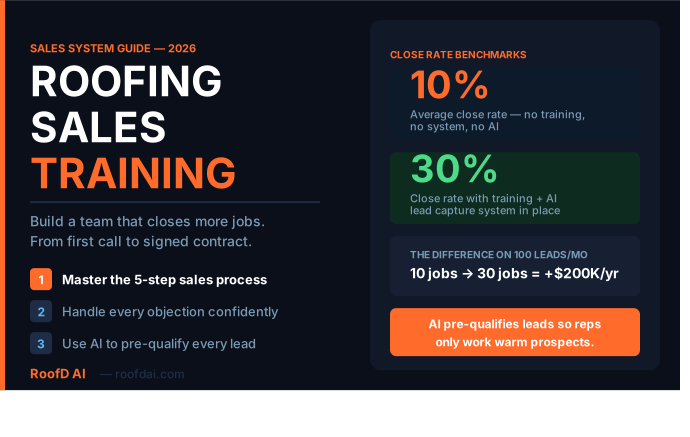
Roofing sales training is the gap between a contractor who closes 10% of leads and one who closes 30%. On 100 leads per month at an average job value of $12,000, that difference is $240,000 in annual revenue, from the same lead volume, the same marketing spend, and the same crews. The only variable is how well the sales team is trained and supported.
Most roofing companies invest heavily in lead generation and almost nothing in sales training. Consequently, ads run, leads arrive, and untrained reps fumble the close, or worse, never follow up consistently enough to give the lead a real chance to convert.
This guide covers the complete roofing sales training system for 2026, from building the right process and handling objections to using AI tools that pre-qualify every lead before a rep ever picks up the phone.
Why Most Roofing Sales Teams Underperform
Sales performance problems in roofing companies almost always trace back to one of three root causes. Identifying which one is costing your team jobs determines where training effort produces the fastest results.
Root Cause 1: No Defined Sales Process
When every rep handles leads differently, results become inconsistent by design. One rep calls within an hour while another calls the next day. Furthermore, one presents estimates in person while another emails them without follow-up. Without a defined process, performance varies entirely based on individual habits, and the best individual habits rarely transfer to new hires automatically.
Root Cause 2: No Objection Handling Framework
Every roofing sales rep hears the same five objections on repeat. Price is too high. Need to think about it. Getting other quotes. Insurance may cover it. Not ready yet. However, without a trained framework for handling each one, reps either capitulate too quickly or push too hard, both of which kill the close.
Root Cause 3: Poor Lead Quality and Weak Pre-Qualification
Reps who spend their time chasing cold, unqualified leads burn out faster and close less. Additionally, a rep calling homeowners who submitted a form three days ago and have not responded is not selling. They are doing data entry. Pre-qualified, warm leads who already have an estimate range and are expecting a call convert at dramatically higher rates. For a full breakdown of how AI pre-qualifies every lead before your sales team calls, read: How to Never Miss a Roofing Lead Again (Even at 2am)
The 5-Step Roofing Sales Process Every Rep Should Master
A defined, repeatable sales process is the foundation of every high-performing roofing sales team. Moreover, every rep, whether brand new or a ten-year veteran, should follow the same five steps on every lead without exception.
Step 1: The First Contact Call
Speed is the entire game at this stage. Leads contacted within 5 minutes are up to 21 times more likely to convert than leads contacted after 30 minutes. Therefore, the goal of the first contact call is not to sell. It is to build immediate rapport, confirm the homeowner’s situation, and schedule the inspection.
Train every rep to open with their name and company, acknowledge the inquiry specifically, and ask one qualifying question first: “What’s going on with your roof?” That question opens the homeowner up, gathers context, and establishes the rep as genuinely interested. As a result, the call ends with one clear goal: a confirmed inspection date and time, nothing else.
Step 2: The Pre-Inspection Preparation
Before arriving at the property, every rep should know the homeowner’s name, address, damage description, estimate range, and material preference. When RoofD AI captures the lead through the website chatbot, all of this context pushes to the CRM automatically. Consequently, the rep arrives informed and able to open with specific knowledge about the homeowner’s situation rather than starting from scratch.
Why Preparation Transforms the Conversation
Preparation also means researching the neighborhood: recent storm activity, comparable jobs in the area, and any insurance claim patterns. In contrast, a rep who arrives cold opens a very different conversation than one who already knows the area had a hail event two weeks ago. Furthermore, knowing that three neighbors have already filed claims gives the rep an immediate, credible opening that unprepared reps simply cannot replicate.
Step 3: The Inspection and Trust-Building Visit
The inspection is not just a measurement exercise. It is the most important trust-building opportunity in the entire sales process. Train reps to walk the homeowner through exactly what they are seeing, explain what it means in plain language, and show photos of every finding on their phone or tablet before leaving the roof.
Homeowners who understand their own roof problem are far more likely to approve a repair or replacement than those who receive a number without context. Furthermore, a rep who takes time to educate the homeowner during the inspection positions themselves as a trusted advisor rather than a vendor, which fundamentally changes the dynamic of the close conversation.
Step 4: The Estimate Presentation
The estimate presentation is where most roofing sales training falls short. Most reps email an estimate and wait, which is one of the lowest-converting approaches available. In contrast, train reps to present every estimate in person or via video call whenever possible.
A strong estimate presentation covers three things in order. First, recap what was found during the inspection and confirm the homeowner understands the scope. Second, present the investment clearly, not apologetically, with options where possible. Third, explain what happens next in your process so the homeowner feels guided rather than pressured. As a result, the homeowner moves toward a decision with confidence rather than uncertainty.
For a full breakdown of how AI estimates change the sales cycle by delivering a number before the inspection, read: AI Roofing Estimates: What Changed for Roofers in 2026
Step 5: The Close and Follow-Up Sequence
Closing is not a manipulation technique. It is a service to the homeowner. A homeowner who has a damaged roof and a credible estimate in hand needs a professional to ask for their decision clearly. Therefore, train reps to ask explicitly (“Based on what we found today, would you like us to move forward?”) rather than leaving the decision entirely open-ended.
When the homeowner does not decide on the spot, the follow-up sequence takes over. Additionally, automated CRM sequences handle the first three follow-up touchpoints: text on day one, email on day two, call reminder on day five. Reps focus their time on leads who are actively engaging, not on manually managing cold contacts.
For ready-to-use follow-up templates for every stage of this sequence, read: Roofing Follow Up Text Templates That Close More Jobs
The 5 Most Common Roofing Sales Objections and How to Handle Them
Every roofing sales rep hears these objections constantly. However, training a specific, confident response to each one is what separates reps who close consistently from those who cave the moment a homeowner pushes back.
Objection 1: “Your Price Is Too High”
The worst response is to immediately drop the price. Doing so signals that the original number was inflated and, as a result, destroys trust in every future estimate. Instead, train reps to acknowledge the concern, reinforce the value, and present options.
Script: “I hear you. This is a significant investment. Let me show you exactly what is included and why the numbers are where they are. Additionally, I can show you a couple of material options that bring the investment down while still protecting your home properly. Which would you like to look at first?”
Objection 2: “I Need to Think About It”
This objection almost always means the homeowner has an unresolved concern they have not yet expressed. In other words, it is not a rejection. It is an invitation to find the real hesitation. Train reps to surface the underlying concern rather than accepting the vague response at face value.
Script: “Absolutely. This is a big decision and I want you to feel confident about it. However, what specific part would be most helpful to think through? Is it the price, the timeline, or something about the process I can clarify right now?”
Objection 3: “I’m Getting Other Quotes”
This is not a rejection. It is a strong buying signal. A homeowner getting quotes is actively planning to hire someone. Furthermore, they are still in the comparison phase, which means winning them is entirely possible with the right response. Train reps to differentiate rather than compete on price.
Script: “That makes complete sense. This is exactly the kind of decision where you should do your homework. While you are comparing, I would encourage you to ask each contractor about their manufacturer certifications, warranty coverage, and how long they have been operating in this area. In fact, we can walk you through all of that right now if you would like.”
Objection 4: “My Insurance Might Cover It”
This objection represents an opportunity, not a threat. Moreover, it positions the rep to become a trusted guide through a process most homeowners find confusing and overwhelming. Train reps to step into that guide role immediately.
Script: “That is great. Let us find out together. We work with insurance claims every day and we can help you document the damage properly before you file. Additionally, the last thing you want is to file without solid documentation and have the claim denied. Want us to help you put together what you need?”
For a complete guide to winning more insurance restoration jobs, read: Roofing Insurance Claims and AI: How Smart Contractors Are Closing More Restoration Jobs
Objection 5: “I’m Not Ready Yet”
Some homeowners genuinely need time. Others, however, are using this as a polite exit. Train reps to identify which situation they are in and respond accordingly, keeping the door open without abandoning the lead entirely.
Script: “No problem at all. Timing matters. However, can I ask what would need to change for it to feel like the right time? I want to make sure we stay in touch and are ready to move when you are.”
How AI Makes Your Sales Team More Effective
The highest-performing roofing sales teams in 2026 are not just better trained. They are better equipped. AI tools handle the pre-sale work that used to consume rep time. As a result, reps spend their hours on warm prospects who are already informed and expecting a call.
Pre-Qualified Leads Arriving With Full Context
When RoofD AI captures a lead through your website, it collects the homeowner’s name, address, damage description, material preference, and delivers an instant satellite-based estimate range, all before a human rep is involved. By the time the rep calls, the homeowner has already received value from your company and is engaged. Consequently, the cold-call dynamic is replaced entirely by a warm continuation of a conversation that already started.
For a full breakdown of how this changes lead quality for your entire team, read: The Real Cost of Not Having a Chatbot on Your Roofing Website
Automated Follow-Up Frees Reps to Focus on Selling
Every rep has a finite number of productive hours in a day. Hours spent manually texting cold leads, leaving voicemails, and updating CRM records are hours not spent on inspections, presentations, and closes. Furthermore, CRM automation handles all of it (instant acknowledgment text, follow-up sequence, inspection confirmation, and estimate follow-up) without anyone managing it manually.
For a complete guide to setting up your CRM automation workflows, read: Roofing CRM Automation: Follow Up Every Lead on Autopilot
Consistent Performance Regardless of Volume
Manual sales processes are only as consistent as the individual rep having a good day. In contrast, automated systems perform identically regardless of lead volume, weather events, or team availability. During a major storm event when 80 leads arrive in 48 hours, automation handles every first touchpoint professionally, while your reps handle the warm conversations that automation surfaces.
Building a Roofing Sales Training Program From Scratch
Whether you are training your first sales hire or rebuilding a team that has been underperforming, a structured training program produces faster and more consistent results than informal on-the-job learning.
Week 1: Product and Process Knowledge
New reps cannot sell what they do not understand. Therefore, week one covers roofing materials and their applications, the replacement and repair process, how insurance claims work, your service areas and competitive advantages, and a full walkthrough of the CRM and AI tools they will use daily.
Week 2: Sales Process and Script Practice
Week two is entirely role-play and repetition. Every rep practices each of the five sales steps repeatedly: first with the trainer, then with each other, then on recorded practice calls. Additionally, every objection gets practiced until the response feels natural rather than memorized and robotic.
Week 3: Shadowing and Supervised Calls
New reps shadow experienced reps on live inspections and estimate presentations. By the end of the week, they are running their own inspections with a supervisor present. Furthermore, feedback happens immediately after each interaction, not in a weekly review meeting where the context has already faded.
Week 4: Independent Performance With Tracking
Reps run their first independent leads with full CRM tracking enabled. Track response time, inspection conversion rate, and close rate from day one. Consequently, gaps appear early: a rep with a high inspection rate but low close rate needs presentation training, while a rep with a low inspection rate needs first-contact training.
For a full look at how AI tools support every stage of roofing business growth, read: How to Scale a Roofing Business With AI in 2026
Frequently Asked Questions About Roofing Sales Training
Q: How long does it take to train a new roofing sales rep? A structured four-week program produces reps who can work independently with competence. However, consistent coaching and performance tracking over the following 90 days is what separates average performers from top closers. Most roofing companies see new reps reach full productivity, defined as matching or exceeding the team’s average close rate, within 60 to 90 days of completing the initial training program.
Q: What close rate should a trained roofing sales rep achieve? Industry benchmarks suggest 15% to 20% for teams without formal training and 25% to 35% for teams with a structured process, objection handling framework, and AI pre-qualified leads. Furthermore, ServiceTitan data shows that proper sales training delivers a 10% increase in average ticket and a 10% increase in close rate, which together produce more than 20% revenue growth. See how RoofD AI features pre-qualify leads so reps work only warm prospects.
Q: Should I hire experienced reps or train from scratch? Both approaches work depending on your situation. Experienced reps bring existing habits, which can be an advantage if those habits are good and a significant liability if they are not. In contrast, training from scratch allows you to build exactly the process you want without the friction of retraining existing behaviors. The most successful roofing sales teams use a combination: experienced reps model the process while new hires learn it formally through the structured program.
More Questions About Roofing Sales Training
Q: What is the most important part of roofing sales training? Objection handling delivers the highest ROI of any training activity. Most lost roofing jobs are not lost because the homeowner chose a competitor. They are lost because the rep did not have a confident, practiced response when the homeowner pushed back. Therefore, drilling the five most common objections until every response feels completely natural is the single most impactful training investment available. For a full look at how your marketing strategy supports your sales team, read: Roofing Marketing Strategy: The Complete Contractor Guide for 2026
Q: How does AI fit into roofing sales training? AI changes what your sales team is actually trained to do. When RoofD AI handles lead capture, instant estimates, and first-touch follow-up automatically, reps are trained to handle warm continuation conversations rather than cold outreach. In other words, the training focus shifts from convincing skeptical homeowners to answer the phone toward converting engaged prospects who already have a number and are expecting a call. For more on the full AI-powered sales system, read: 5 Ways Roofing Companies Are Using AI to Book More Jobs in 2026
Q: How do I measure whether roofing sales training is working? Track four metrics before and after implementing training. First, lead-to-inspection conversion rate: are reps booking more inspections from the same lead volume? Second, inspection-to-estimate conversion rate: are reps presenting more estimates from each inspection? Third, estimate-to-signed contract rate: are more estimates converting to signed jobs? Fourth, average time from lead arrival to signed contract: is the sales cycle shortening? Additionally, improvement across all four metrics simultaneously confirms the training is producing measurable results.
Build the Sales Team Your Marketing Deserves
Every dollar spent on lead generation deserves a sales team trained to convert it. A strong marketing system feeding a weak sales process is one of the most common and most expensive mismatches in the roofing industry.
Building a trained, systematized sales team, supported by AI tools that pre-qualify leads and automate follow-up, is what turns a busy roofing company into a consistently profitable one.
Or start your 7-day free trial. No charge until day 8, cancel any time.
