Roofing insurance claims are the most lucrative jobs in the industry — and the most competitive. A hailstorm rolls through a metro area on a Tuesday night. By Wednesday morning, every restoration contractor within driving distance knocks the same doors, calls the same homeowners, and competes for the same insurance jobs.
Winning in that environment no longer comes down to who has the best crews. Speed, documentation quality, and capturing leads before the competition — those factors separate contractors who dominate storm season from those who merely survive it.
This guide breaks down exactly how roofing insurance claims are changing in 2026, where AI fits in, and how RoofD AI captures the homeowner lead before your competitor even knows the storm hit.
Why Roofing Insurance Claims Are Getting Harder to Win
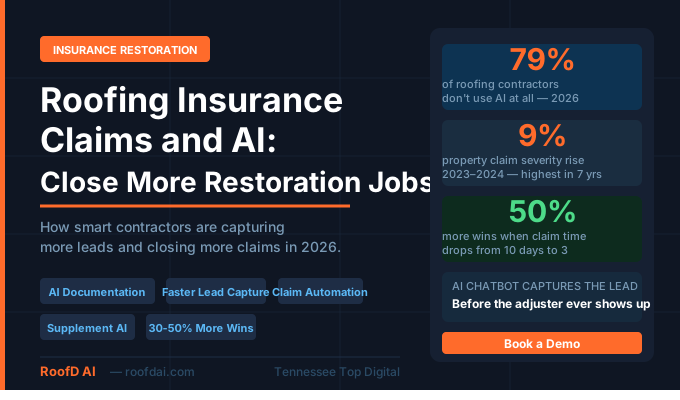
The insurance restoration market is growing — and getting more difficult at the same time. GlobalData projects U.S. property insurance premiums will reach $546 billion by 2030. Property claim severity rose 9% from 2023 to 2024 — the highest increase in seven years.
More claims mean more opportunity. However, tighter documentation requirements and faster adjuster timelines mean the contractors who win are those who move fastest with the most credible paperwork.
The Documentation Standard Is Rising
Insurance carriers in 2026 require more detailed proof of damage than ever before. High-quality photos, GPS-verified inspection reports, and Xactimate-formatted estimates are now expected before an adjuster approves a scope. Contractors who show up with a clipboard and phone photos face an immediate disadvantage compared to those who arrive with drone documentation and AI-generated estimates.
The Speed Gap Is Now a Win Rate Gap
Industry data shows that cutting the time from initial contact to filed claim — from 7 to 10 days down to 2 to 3 days — increases win rates by 30 to 50%. Homeowners commit to the contractor who moves fastest. Furthermore, a homeowner who files their claim with your estimate already in hand rarely switches contractors mid-process.
For a broader look at how AI changes your speed advantage across storm season, read: How Roofing Contractors Can Win More Storm Season Jobs With AI
Where AI Fits Into the Insurance Restoration Workflow
AI replaces the slow, manual, error-prone work that delays claims and costs jobs. There are four specific points in the restoration workflow where AI delivers measurable impact.
Stage 1 — Lead Capture Before the Competition Arrives
The most important moment in any insurance restoration job is the first one — capturing the homeowner before any other contractor does. After a storm event, homeowners search online immediately. Many search at night, when roofing offices are closed and contact forms sit silent.
An AI chatbot on your website engages that homeowner the moment they land. It asks about the damage, collects their address, pulls a satellite-based estimate range, and captures contact details. By the time your sales rep calls the next morning, the lead already sits in your CRM with full context. Moreover, the homeowner has already invested time in a conversation with your company — making them far less likely to start over with a competitor.
RoofD AI was built specifically for this scenario. Setup takes under 10 minutes, and every lead the chatbot captures pushes automatically to your CRM via webhook — complete with roof size, damage description, material preference, and estimate range.
For a full breakdown of how lead capture works at every stage of a storm event, read: How to Never Miss a Roofing Lead Again (Even at 2am)
Stage 2 — AI-Powered Drone Inspection and Damage Documentation
Once the homeowner commits, documentation quality determines how smoothly the claim moves through the adjuster process. AI-powered drone inspection tools — like IMGING by Loveland Innovations — automate flight paths, detect and classify damage, and produce GPS-tagged inspection reports in under 30 minutes.
That documentation is time-stamped and GPS-verified. Adjusters trust it over phone photos from a ladder. The difference between these two documentation approaches is not marginal — it is the difference between a fast approval and weeks of back-and-forth.
Why Drone Inspections Are Becoming Standard
The FAA projects drone inspection services will grow 18% annually through 2026. Restoration contractors who have integrated drone inspections into their standard workflow are pulling ahead of everyone still using ladders and clipboards. The hardware investment pays back within two or three jobs through faster approvals and better close rates.
Stage 3 — AI Estimate Generation Before the Adjuster Arrives
The contractors who get approved faster and earn more are those who arrive at adjuster meetings with a detailed, Xactimate-formatted estimate already prepared. When your estimate is detailed and formatted correctly, the adjuster must engage with your numbers rather than set them.
AI estimating tools like XBuild generate Xactimate-formatted estimates from plain language job descriptions. No Xactimate expertise is required. Any team member can prompt the platform with job specifics and have a professional estimate ready before the adjuster shows up.
For a detailed comparison of estimating tools available for restoration contractors, read: AI Roofing Estimates: What Changed for Roofers in 2026
Stage 4 — Automated Follow-Up During Volume Surges
During a major storm event, a single hail system can generate hundreds of homeowner inquiries in 48 hours. Managing that volume manually is physically impossible for most roofing operations.
AI-powered CRM automation solves this by firing follow-up sequences the moment a lead enters the system. An automated text fires within 60 seconds. An automated email follows within 5 minutes. A task gets created for your sales rep with full lead context already populated. Companies running these automations report eliminating up to 80% of inbound status calls — because homeowners receive updates automatically throughout the process.
For a full comparison of the CRM platforms that support this automation, read: JobNimbus vs AccuLynx — Which CRM Is Right for Your Roofing Company?
The Numbers That Explain Why AI Adoption in Restoration Is Accelerating
The 2026 ServiceTitan Roofing and Exterior Market Report produced a finding every restoration contractor should know. Only 4% of roofing contractors currently use AI in their CRM. Meanwhile, 79% do not use AI at all.
What That Gap Means for Your Business
That 79% figure is an opportunity. Contractors who have implemented AI lead capture, documentation, and follow-up automation operate at a structural advantage over the overwhelming majority of their competition.
Why Acting Now Matters More Than Waiting
Capturing leads while competitors sleep, arriving at adjuster meetings with better documentation, and following up consistently without manual effort — these advantages compound over an entire storm season. Furthermore, the gap is widening rather than closing. Every storm season without AI adoption is a season spent competing on a playing field that increasingly favors contractors who moved first.
For a full breakdown of the tools powering this competitive shift, read: The Best AI Tools for Roofing Companies in 2026
How to Build Your AI-Powered Insurance Restoration System
Building an AI-powered restoration workflow does not require a technology background or a large upfront investment. The system has four components, and each one builds on the previous.
Component 1 — AI Lead Capture on Your Website
Start here before anything else. RoofD AI goes live on your website in under 10 minutes. Every homeowner who visits after a storm gets engaged immediately — regardless of the hour. Every lead the chatbot captures arrives in your CRM automatically.
Component 2 — Drone and AI Inspection Capability
Invest in a drone and AI damage detection software before storm season starts. A capable inspection drone costs $2,000 to $5,000. AI analysis software runs $100 to $200 per month. Within two or three insurance jobs, the investment pays back through faster approvals and better close rates.
Component 3 — AI-Generated Xactimate Estimates
Train at least one team member on an AI estimating platform before the busy season. Xactimate expertise is no longer a requirement — AI tools generate formatted estimates from plain language job descriptions in minutes. Arriving at every adjuster meeting with a complete estimate changes every negotiation.
Component 4 — Automated CRM Follow-Up Sequences
Configure your CRM follow-up sequences before the first storm hits. New lead arrives, automated text fires within 60 seconds, automated email fires within 5 minutes, sales rep task gets created within the hour. This sequence runs without anyone managing it manually. Your team wakes up to organized, warm leads every morning of storm season.
For a practical guide to building the full AI-powered lead and follow-up system, read: 5 Ways Roofing Companies Are Using AI to Book More Jobs in 2026
Frequently Asked Questions About Roofing Insurance Claims and AI
Q: How does AI help with roofing insurance claims specifically? AI helps at four stages of the restoration workflow. Lead capture ensures you reach the homeowner before competitors do — especially after hours. Drone and AI inspection software produces GPS-tagged damage documentation that adjusters trust. AI estimating tools generate Xactimate-formatted estimates without requiring expertise. Automated CRM follow-up keeps every lead warm throughout the claim process without manual effort from your team.
Q: Does using an AI chatbot for lead capture work for insurance restoration leads? Yes — and the timing makes it particularly valuable for restoration work. Homeowners searching for roofing help after storm damage often do so outside business hours. An AI chatbot that engages them immediately and captures their contact details secures commitment far more reliably than a contact form. See how RoofD AI features handle insurance restoration lead capture specifically.
Q: What documentation do I need to win roofing insurance claims faster? Insurance carriers in 2026 expect high-quality photographic evidence, GPS-verified inspection reports, and Xactimate-formatted estimates. Drone inspection software with AI damage detection produces all three — time-stamped aerial photos, classified damage reports, and documentation formatted for adjuster review. Contractors who arrive with this level of documentation consistently report faster approvals and fewer supplement battles.
More Questions About Roofing Insurance Claims and AI
Q: How does AI reduce the time from lead to filed claim? Cutting that timeline from 7 to 10 days down to 2 to 3 days increases storm claim win rates by 30 to 50%. AI shortens the timeline at every stage — lead capture happens instantly, inspection documentation takes under 30 minutes, estimates get generated before the adjuster arrives, and follow-up fires automatically. For a practical look at how this plays out during a real storm season, read: How Roofing Contractors Can Win More Storm Season Jobs With AI
Q: Can small roofing companies realistically implement AI for insurance restoration? Absolutely. RoofD AI starts at $99 per month and takes under 10 minutes to set up. Drone hardware starts at $2,000 to $5,000 with AI software at $100 to $200 per month. AI estimating platforms like XBuild require no Xactimate expertise. The total stack costs a fraction of one additional office hire — and operates 24 hours a day throughout storm season.
Q: What happens to insurance restoration leads that come in after hours without AI? Without an after-hours lead capture system, those leads go to whoever responds first. Homeowners searching for a roofer after a storm do not wait until morning. A contact form that sends a notification to a phone turned off at 11pm is not a lead capture system. For a detailed look at what that after-hours gap costs over a full season, read: The Real Cost of Not Having a Chatbot on Your Roofing Website
Q: How does RoofD AI integrate with the CRM platforms restoration contractors use? RoofD AI integrates via webhook with AccuLynx, JobNimbus, HubSpot, GoHighLevel, Salesforce, Zapier, Buildertrend, and ServiceTitan. Every lead the chatbot captures arrives in your CRM automatically — contact details, roof size, damage description, material preference, and estimate range all included. For a comparison of how AccuLynx and JobNimbus handle insurance restoration workflows, read: JobNimbus vs AccuLynx — Which CRM Is Right for Your Roofing Company?
Build Your Insurance Restoration AI System Before the Next Storm Hits
The roofing contractors dominating insurance restoration in 2026 are not outworking their competition. Capturing leads while competitors sleep, arriving at adjuster meetings with better documentation, and following up consistently without manual effort — these advantages compound over an entire storm season.
Building that system takes less time and money than most contractors expect. Getting it live before the next storm is what separates the contractors who look back on storm season as their best revenue period from those who wonder where all the leads went.
Or start your 7-day free trial — no charge until day 8, cancel any time.